Last month my order from Stark’s Nursery arrived, and the box was almost as big as me! It contained three bare root fruit trees, an apple, peach, and plum, and twenty asparagus plants.
I was delighted!
We planted the three trees that very Sunday, and I took care of the asparagus on Monday. I must confess that planting asparagus is like trying to plant an octopus! Or in this case twenty octopi! It was very hard work, and Violet helped, but I was tired!
PROCEDURE:
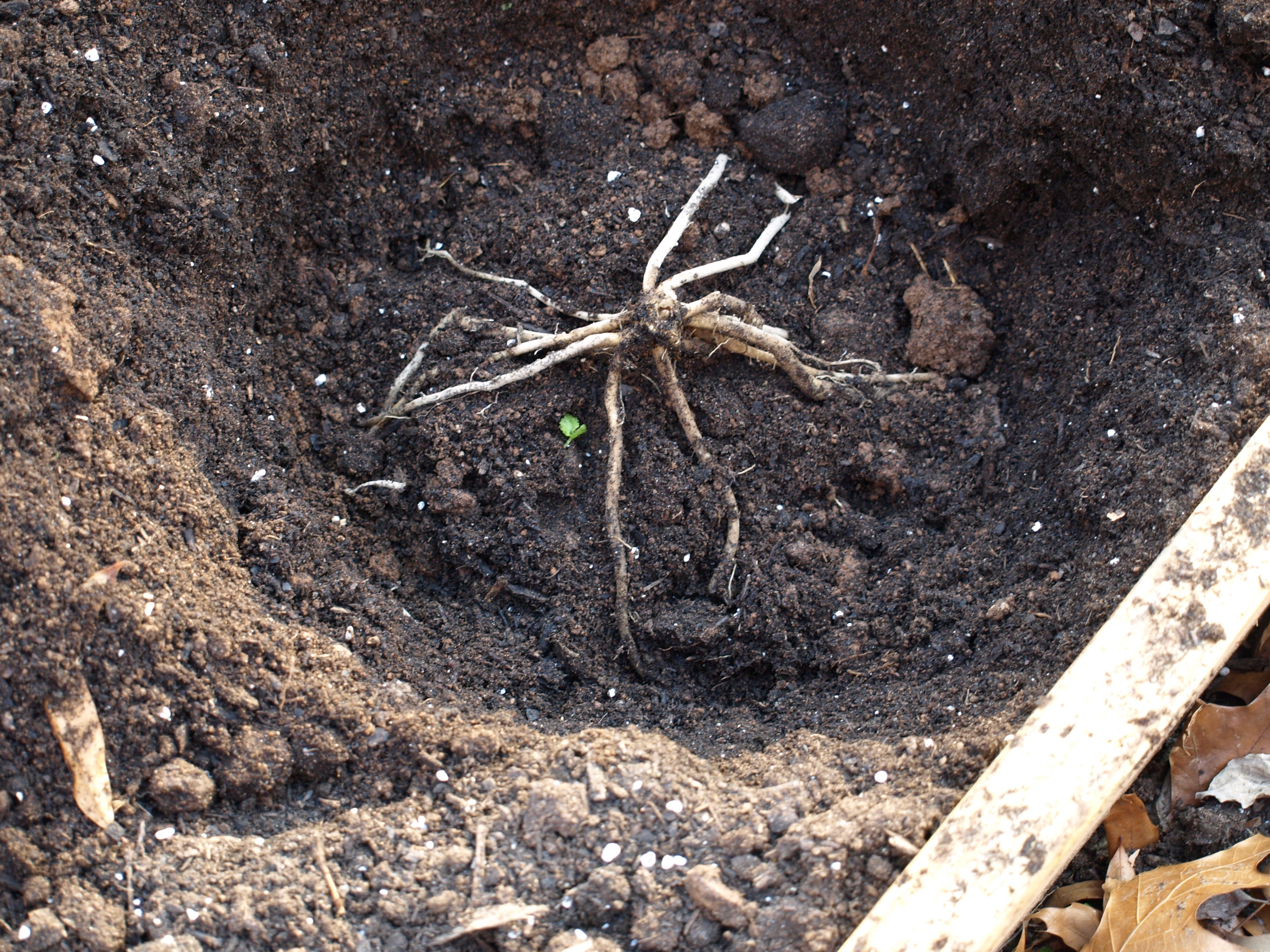
First you dig the hole, then mound up the dirt in the center and place your octopus over the mound like this.
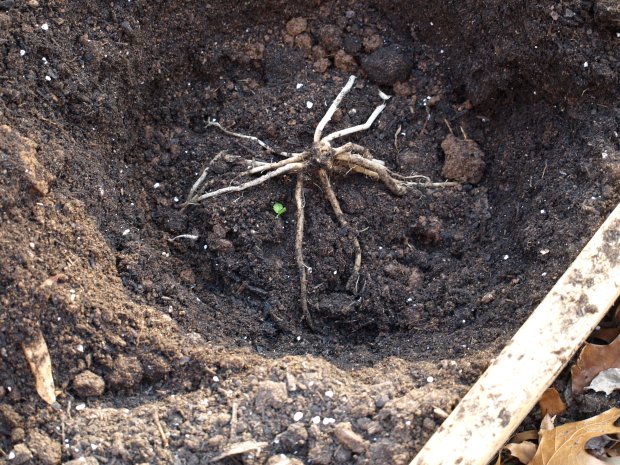
So what’s so hard about that you ask?
Let me back up, then. Well, for starters I had to entirely amend that clay soil to make it permeable. Asparagus puts down a very deep root system, some say six feet, others say up to ten feet, and they like good drainage. Luckily, our clay seems to drain well, but I wanted to give it at least a two foot head start with the amendments. I had the advantage with the raised bed, but that still meant going down into the base soil for that extra foot.
The next step was getting the tentacles and crown to lay flat on the little hills while I back-filled each hole. The crowns need to be two to three inches under the soil with no air pockets underneath. I spread them out, placing the long, rubbery roots down into the soil. I pressed the crown down and PoP! They spring right back up! I finally learned to just weight them down by placing several large handfuls of soil on the center of the plant.
Now I had to dig, mound, spread roots, hold down crowns and back-fill nineteen more times.
Only three more to go!

The plants are in and watered. Now I wait. You see, asparagus takes about three years to mature to a size where you can harvest from the plants. This is an investment of preparation, care, and time. However, if you enjoy asparagus, and we do, it is definitely worth the effort, because an asparagus bed will last for years!
~*~
My favorite way to eat asparagus is grilled. You can do this outside on the barbecue, or in your oven using the broiler.
GRILLING ASPARAGUS:
You will need:
- One bunch of asparagus
- Olive oil
- Kosher salt
Preparation:
- Rinse asparagus and drain well
- Lightly coat with olive oil and place on foil lined grill if using the broiler, or directly onto a grilling tray if using the barbecue
- Lightly sprinkle with kosher salt
This method cooks relatively fast so stay close by. When the one side has turned a darker green and looks a bit wrinkled (not too much!) turn the asparagus and finish the other side. Serve immediately.
~*~
NOTE: Some people, Like the Barefoot Contessa like theirs served with a delightful Parmesan sauce and lemon! Please click on her name above to be taken to her inspired recipe for this delicious vegetable!
UPDATE:
I just found this lovely article that tells all on Asparagus, its history, uses, nutrition and more. For instance, did you know this power packed vegetable is from the lily family? You might like to take a look here at Nutrition and You.



 Lil’ Bit tiptoeing through the wet leaves.
 A festive chicken yard
 The newly revamped front flower bed.
  *Winged Sumac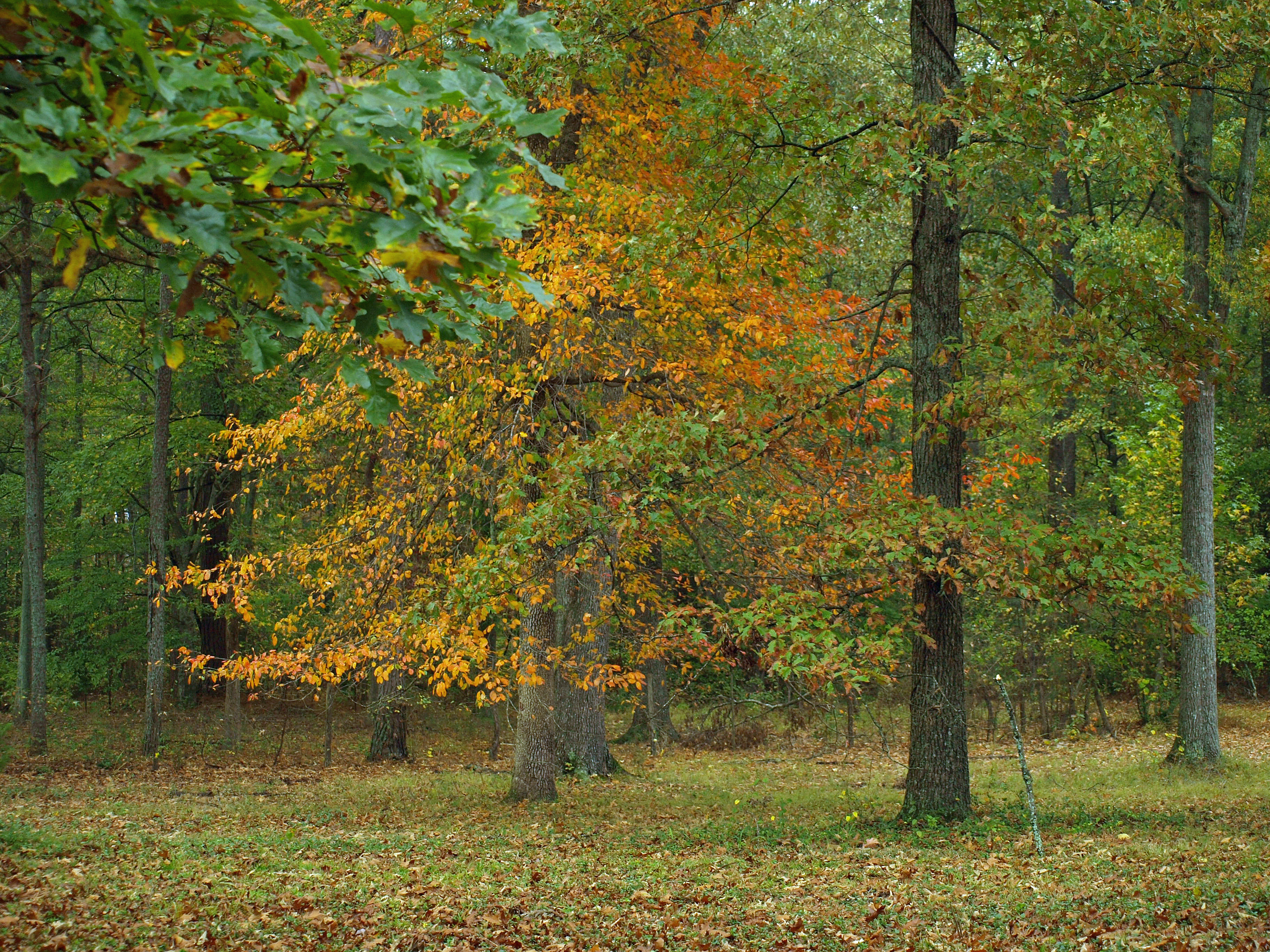
 Life on the Farmlet