In the Garden: planting octopi

Last month my order from Stark’s Nursery arrived, and the box was almost as big as me!  It contained three bare root fruit trees, an apple, peach, and plum, and twenty asparagus plants.

I was delighted!

We planted the three trees that very Sunday, and I took care of the asparagus on Monday.   I must confess that planting asparagus is like trying to plant an octopus!  Or in this case twenty octopi!  It was very hard work, and Violet helped, but I was tired!

PROCEDURE:

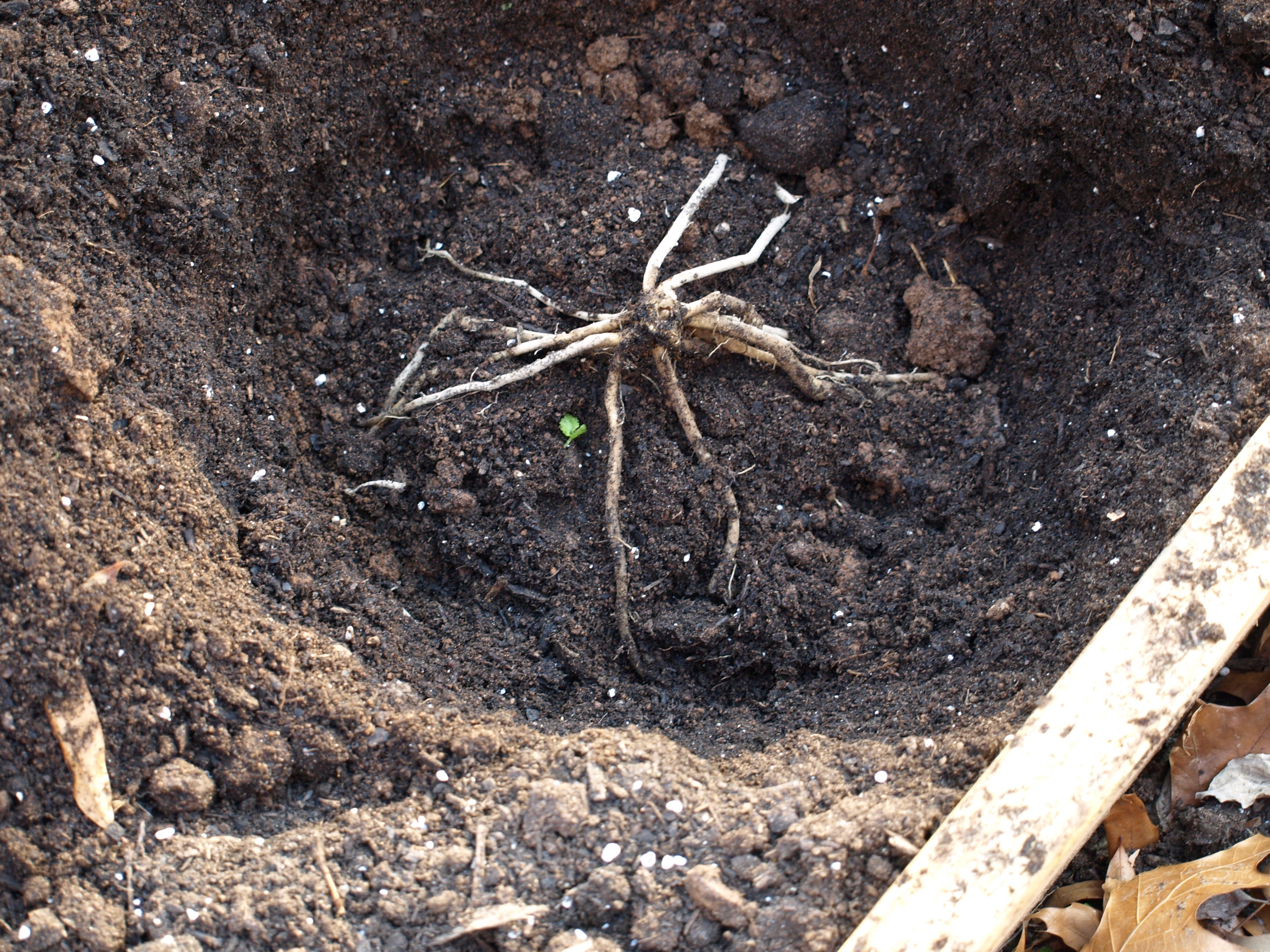
First you dig the hole, then mound up the dirt in the center and place your octopus over the mound like this.
So what’s so hard about that you ask?

Let me back up, then.  Well, for starters I had to entirely amend that clay soil to make it permeable.  Asparagus puts down a very deep root system, some say six feet, others say up to ten feet, and they like good drainage.  Luckily, our clay seems to drain well, but I wanted to give it at least a two foot head start with the amendments.  I had the advantage with the raised bed, but that still meant going down into the base soil for that extra foot.

The next step was getting the tentacles and crown to lay flat on the little hills while I back-filled each hole.  The crowns need to be two to three inches under the soil with no air pockets underneath.   I spread them out, placing the long, rubbery roots down into the soil.  I pressed the crown down and  PoP!  They spring right back up!  I finally learned to just weight them down by placing several large handfuls of soil on the center of the plant.

Now I had to dig, mound, spread roots, hold down crowns and back-fill nineteen more times.

Only three more to go!

The plants are in and watered.  Now I wait.  You see, asparagus takes about three years to mature to a size where you can harvest from the plants.  This is an investment of preparation, care, and time.  However, if you enjoy asparagus, and we do, it is definitely worth the effort, because an asparagus bed will last for years!

~*~

My favorite way to eat asparagus is grilled.  You can do this outside on the barbecue, or in your oven using the broiler.

GRILLING ASPARAGUS:

You will need:

  1. One bunch of asparagus
  2. Olive oil
  3. Kosher salt

Preparation:

  1. Rinse asparagus and drain well
  2. Lightly coat with olive oil and place on foil lined grill if using the broiler, or directly onto a grilling tray if using the barbecue
  3. Lightly sprinkle with kosher salt

This method cooks relatively fast so stay close by.  When the one side has turned a darker green and looks a bit wrinkled (not too much!) turn the asparagus and finish the other side.  Serve immediately.

~*~

NOTE:  Some people, Like the Barefoot Contessa like theirs served with a delightful Parmesan sauce and lemon!  Please click on her name above to be taken to her inspired recipe for this delicious vegetable!

UPDATE:

I just found this lovely article that tells all on Asparagus, its history, uses, nutrition and more.  For instance, did you know this power packed vegetable is from the lily family?  You might like to take a look here at Nutrition and You.

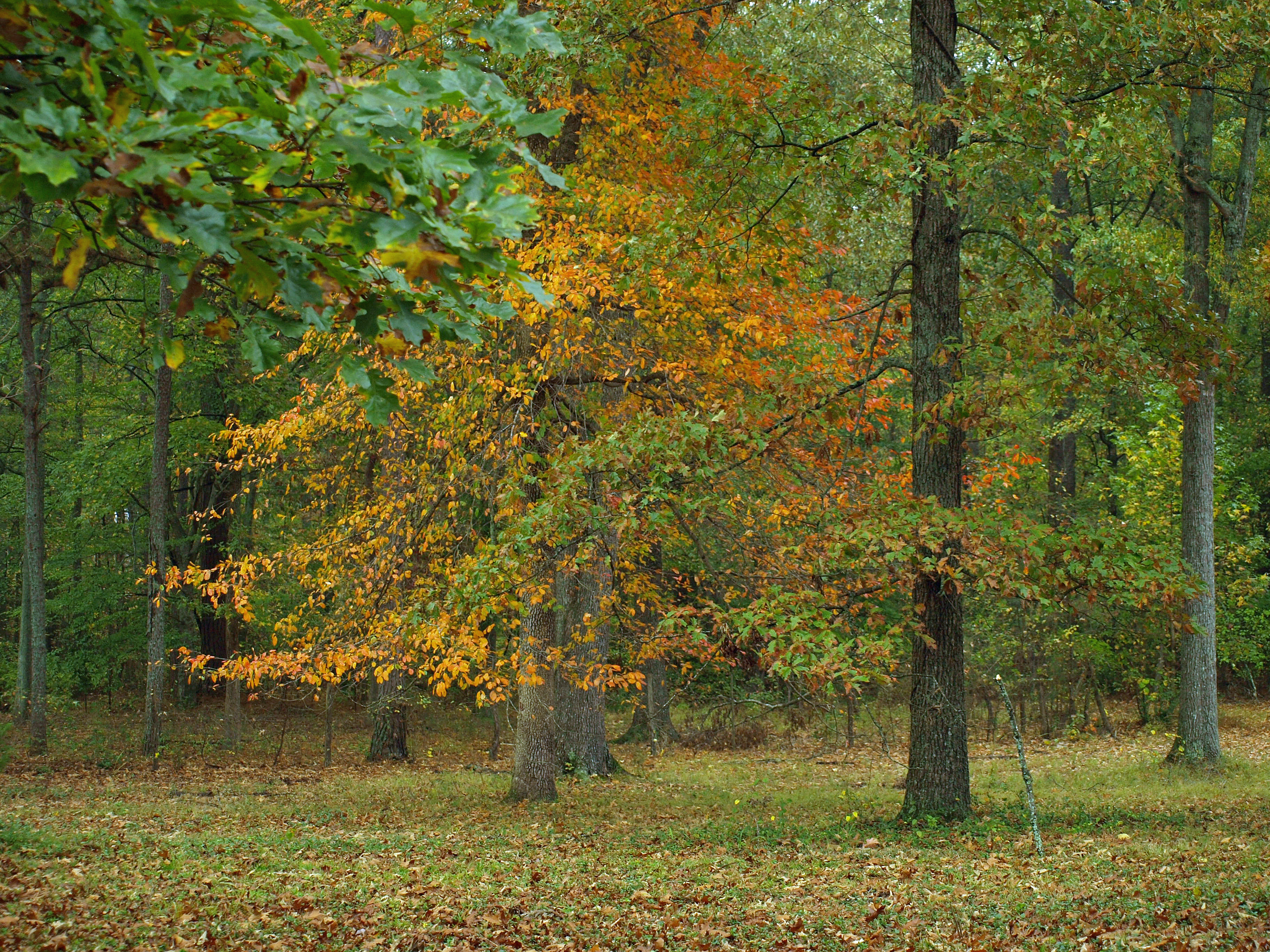
*Fall is Not Easy: a colorful view of the farmlet

Here on the Farmlet it seems that every fall, just when we start getting some great color, the wind comes and takes it all away.  This fall was no exception and to make matters worse I find myself lame and on a walking stick.  And for those who are wondering, “YES, I am going to the Dr. tomorrow because it has been a week and I am not improving.”

However, wind and lame knee aside, I decided I would give it my best shot and get out to see if I could capture what remains!

Lil’ Bit tiptoeing through the wet leaves.

A festive chicken yard

The newly revamped front flower bed. 

NOTE:  It used to be harder to find native plants, shrubs, and perennials, but all of a sudden the deep South is “getting it.”  I am back in my element!  Not all is native, but the bulk of it will be when I am done!

*Winged Sumac 

This is something I have wanted in my garden for some time, but had not found a local source for it.  I don’t know how it got here perhaps a bird, or the tornado storm, but it is definitely a welcome native.  Do you know why she is called “winged?”

Notes from the USDA Native Plants Database:  “Sumac serves primarily as a winter emergency food for wildlife. Ring-necked pheasant, bobwhite quail, wild turkey, and about 300 species of songbirds include sumac fruit in their diet. It is also known to be important only in the winter diets of ruffed grouse and the sharp-tailed grouse. Fox squirrels and cottontail rabbits eat the sumac bark. White-tail deer like the fruit and stems.
Sumac also makes good ornamental plantings and hedges because of the brilliant red fall foliage.

One burnished tree. 

This one can be viewed closer by clicking on it.  😉

~*~

Happy Autumn!

~*~

(I had fun, even if the results are less than spectacular!)

NOTES: 

  • Today’s title “Fall is Not Easy”  comes from a favorite children’s book I used to share with my little students during the season.  If you have little ones Pre-K to 3rd grades (+ or -)  then perhaps you would like to preview this entertaining book.  Look HERE
  • Why is Winged Sumac ‘winged?’  Have a look at the USDA Plant database PDF – HERE  and the site information HERE


Spring Happenings: a mini tour

Spring came early this year and I was prepared.  My tomatoes and peppers were started in the kitchen window, lots of them, and as soon as I could I was out planting peas, broccoli, spinach, lettuces, rutabagas, turnips, beets and more!  All this work attracted the attention and the admonishment of a neighbor that, “We could still have a cold snap as late as April…” but I am feeling fearless because I have frost blankets to keep their little roots warm!

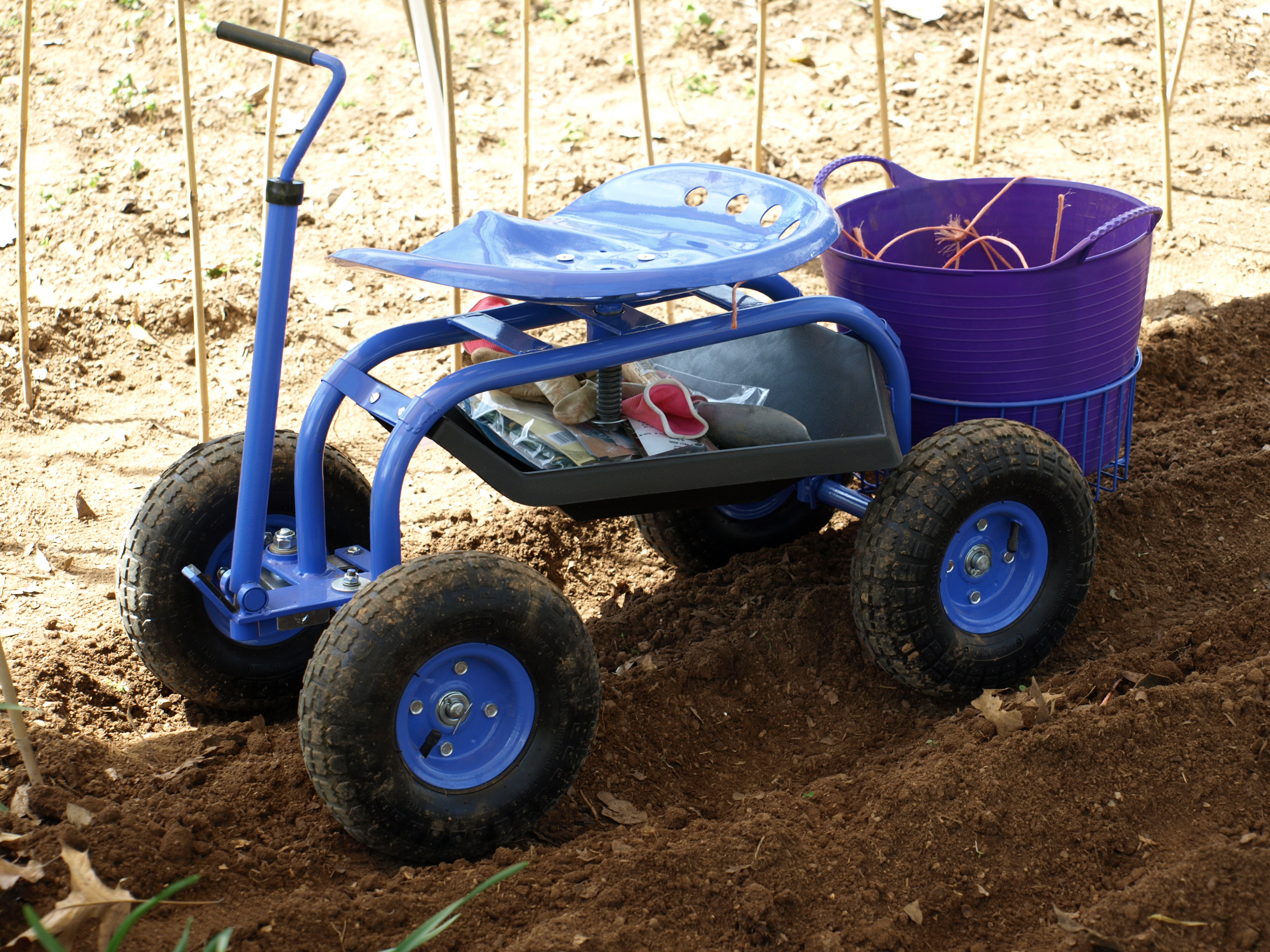
I even bought myself a new little tractor to help me get the job done!  Last year when I gardened I cried.  Literally.  I have a herniated disk in my lower back and getting down to ground level was a not working for me.  Hence my garden was not what I wanted or usually have here on the Farmlet.  However, now I have Violet to help me get the job done!

What!?! 

You’re laughing? Well hey, if men can name their cars then I can name my lovely new tractor assistant.

Meet Violet!

In this photo I was under the shade of my pop up to keep the sun from scorching my skin while I worked…  I went in to eat lunch and when I returned the pop-up was in the neighbors fence with broken legs…

!!! 😦 !!!

But I kept the poles to be used as tomato stakes! Reduce, Reuse, Recycle, right?

OK, so how about I just quit talking and show you spring on the Farmlet?

So, without further adieu…

Little Dorrit  and one of the Hueys assist with the weeding of the onions and garlic.

A gratuitous dog picture.  Gotta have a dog in this post, and so I introduce you to Buddy, our other wonderful dog.  Isn’t he beautiful?  (It was brought to my attention that I have a tendency to overlook him in favor of the Little Dog.    This one’s for you Pam 😉 )

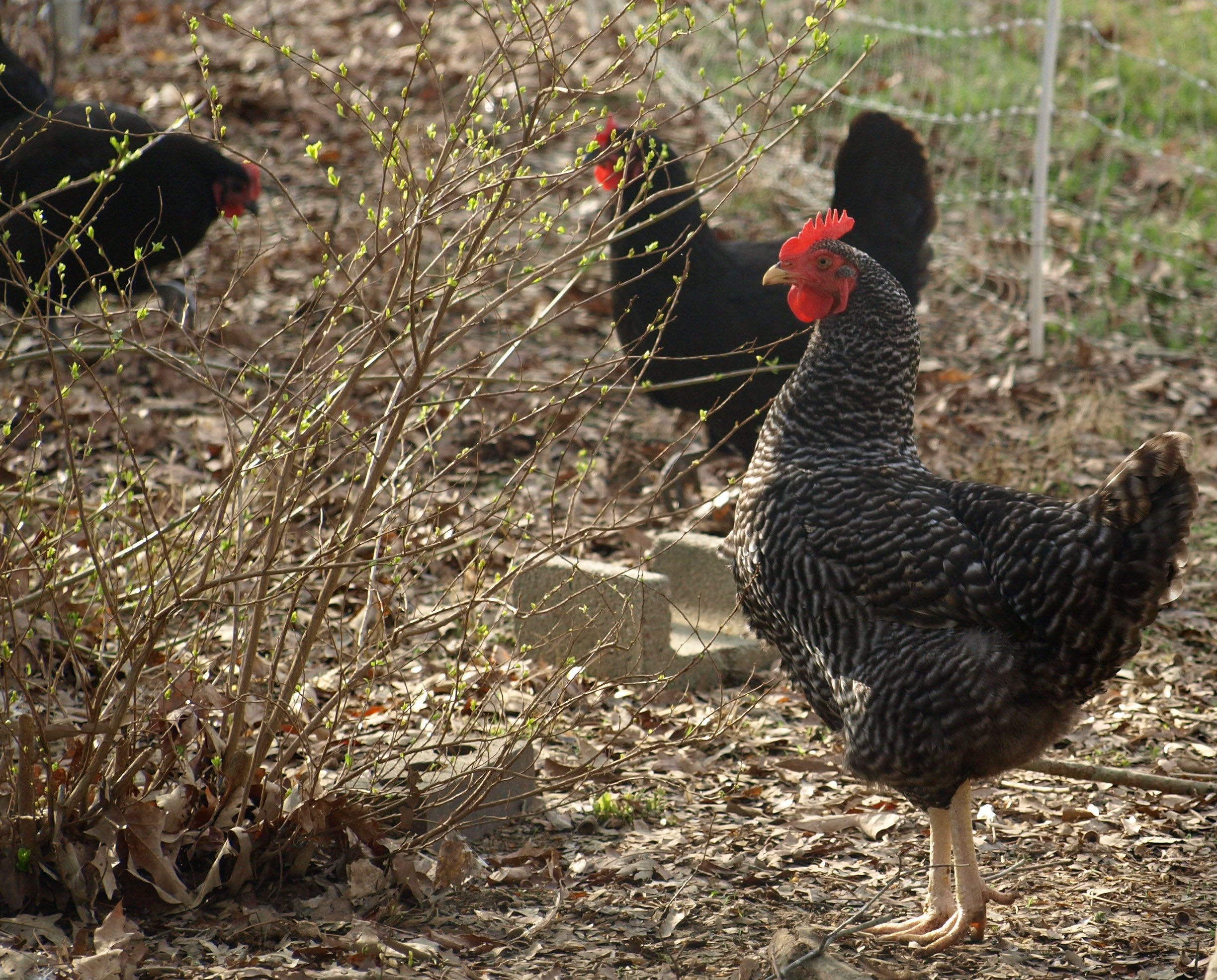
Remember this little hen?  Can you believe she’s the same one I almost lost last year? (read about that HERE)

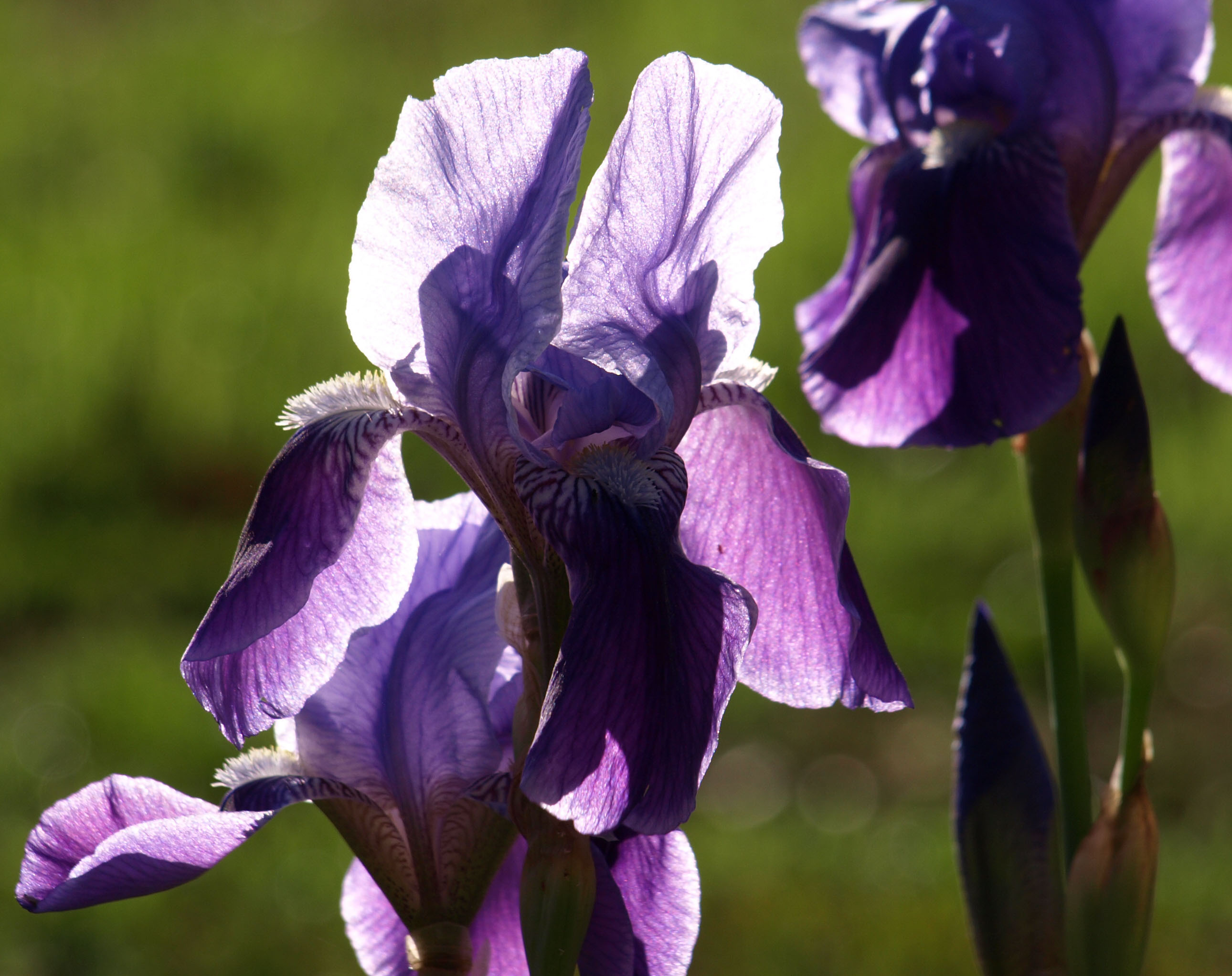
Iris in the morning light.

These grow with abandon all over our little acre, and in many colors too!

~*~

The following photographs are of the native plants I have growing here.  Growing what is native to the region in which I live is a passion of mine…

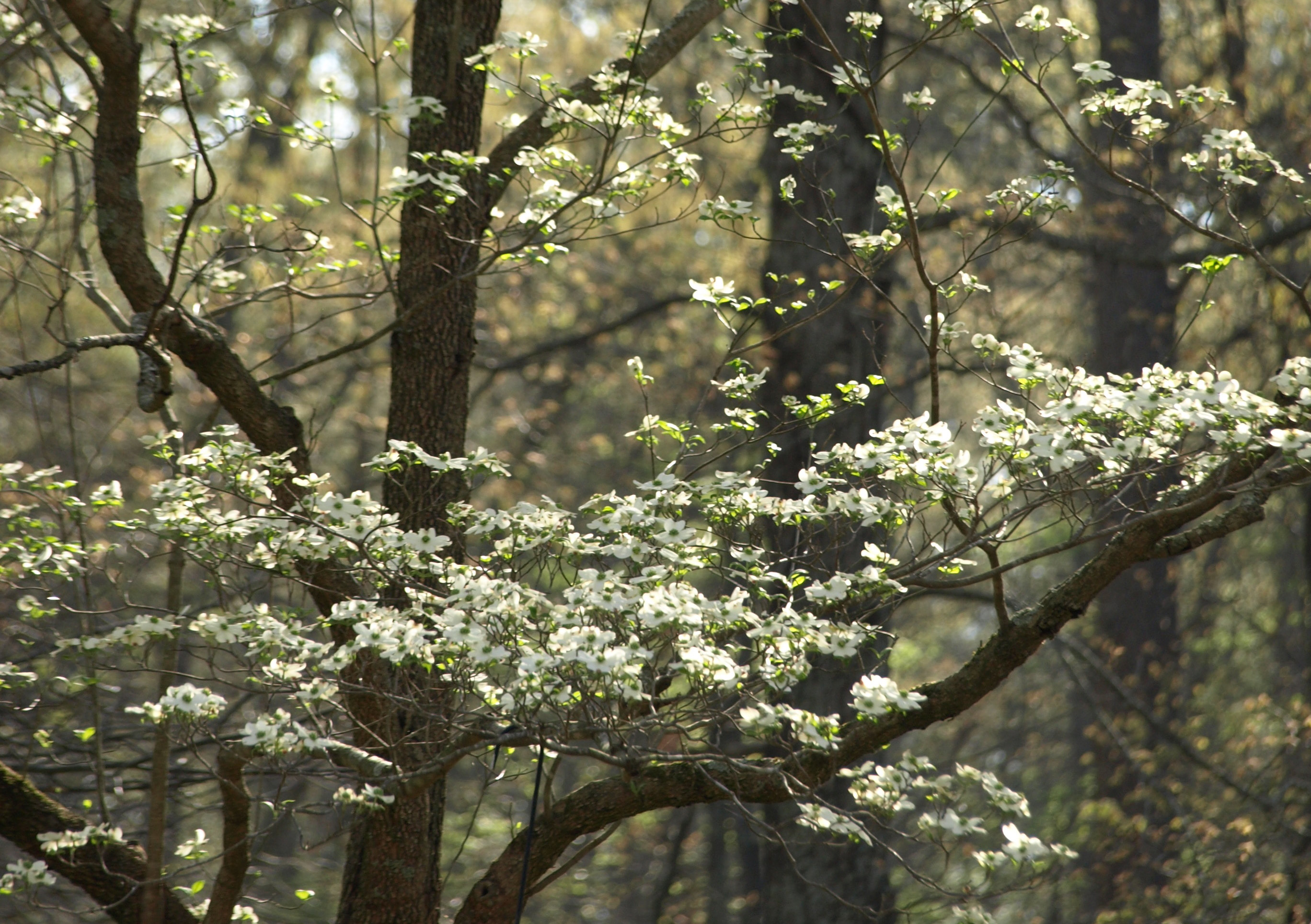
We have eight of these lovely trees here on the Farmlet.  We used to have more but we lost them to storms, age, and unfortunately, the new garage/barn.  We are loosing a couple more to termites as well.  I think I will replace them, but perhaps not in the same place.

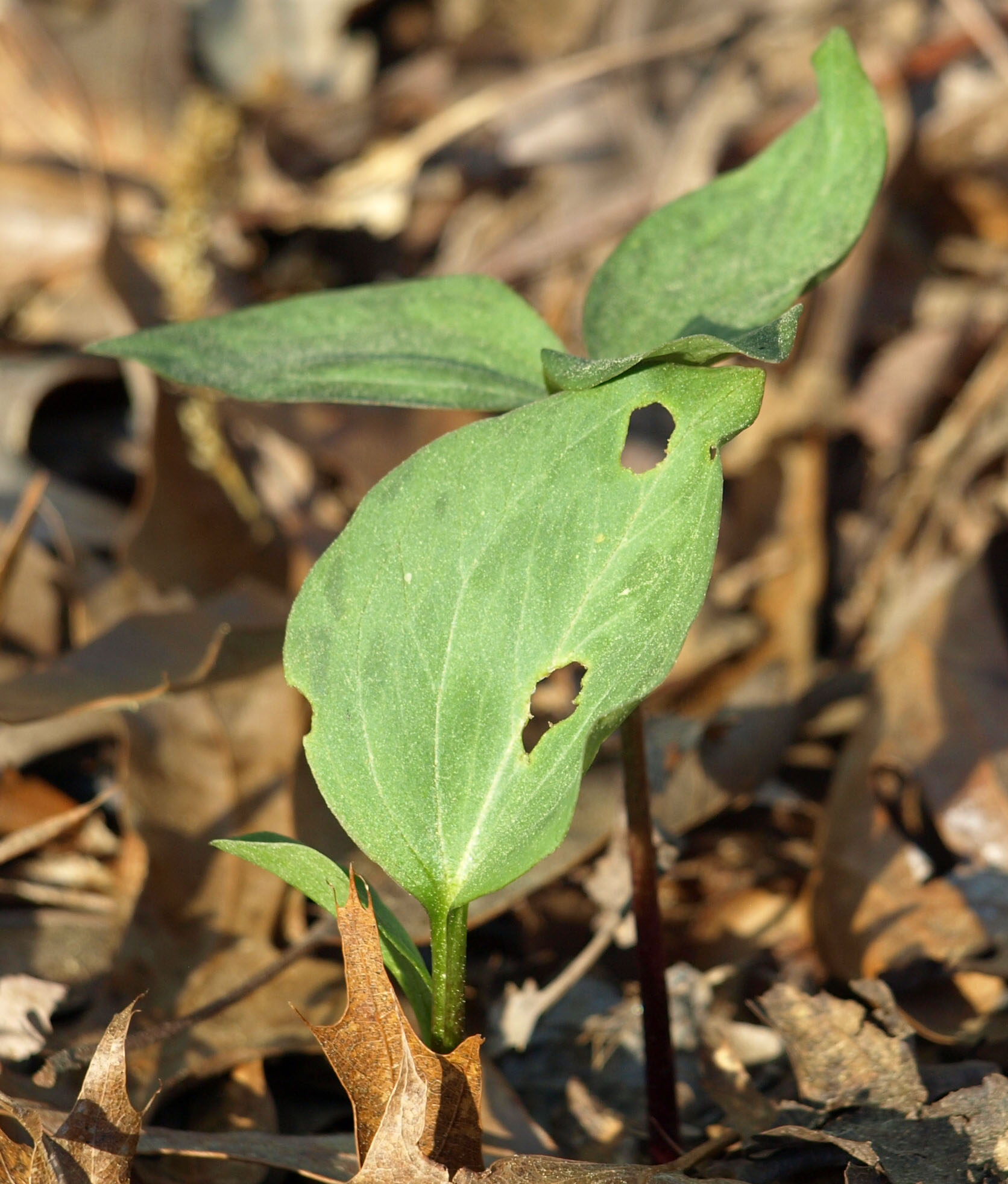
You may also recall my visit to the Lovely Plant Lady last April?  (look HERE) Well, I was certain that the May Apples and Trillium hadn’t made it, but NO, here is the May Apple

and here is the Trillium!  So glad I haven’t lost my native garden gardening skills. Can’t wait to see this garden in bloom this year!

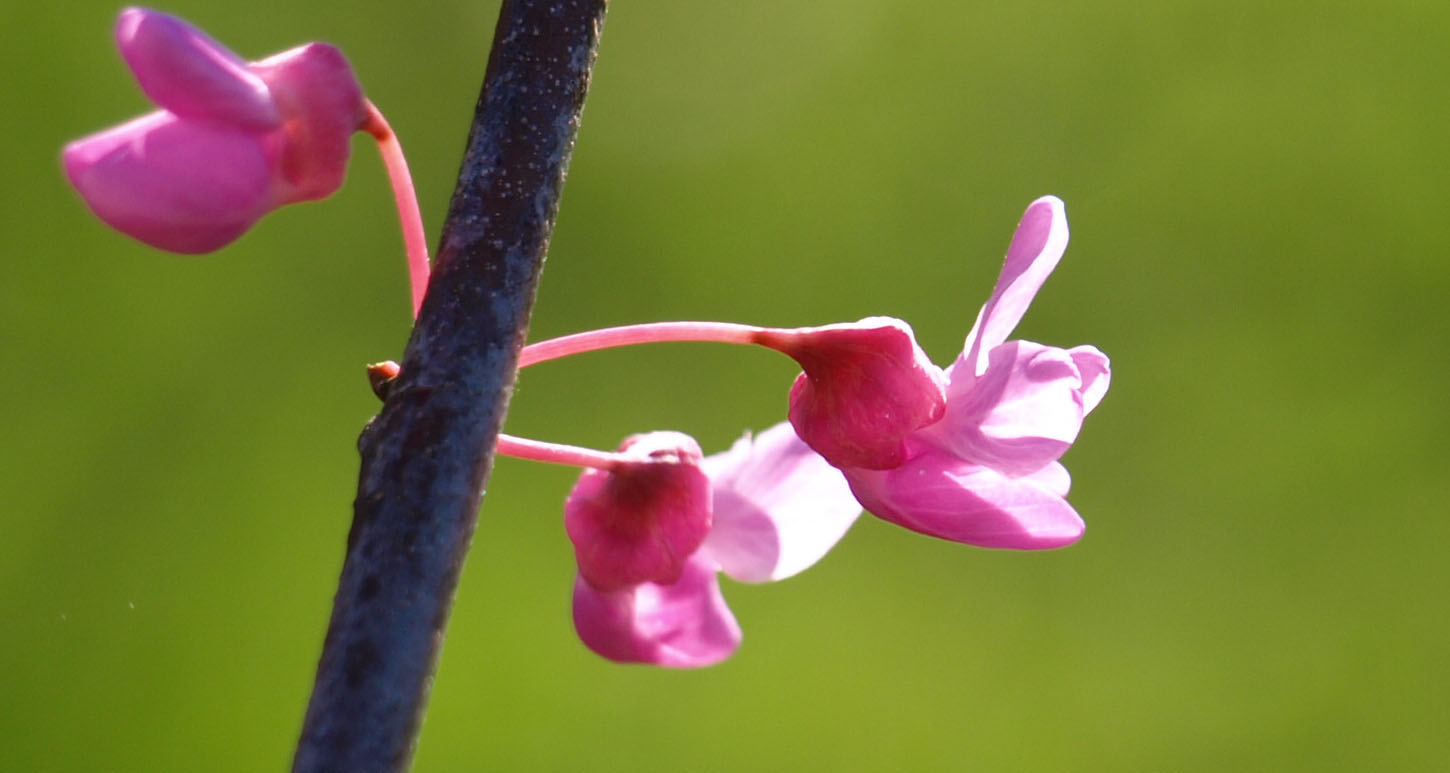
These are Red Bud blossoms.  Roughly the size of a small pea, they pop out from the bark to cover the branches.  It is stunning to see them all throughout the woods here.

~*~

And finally…

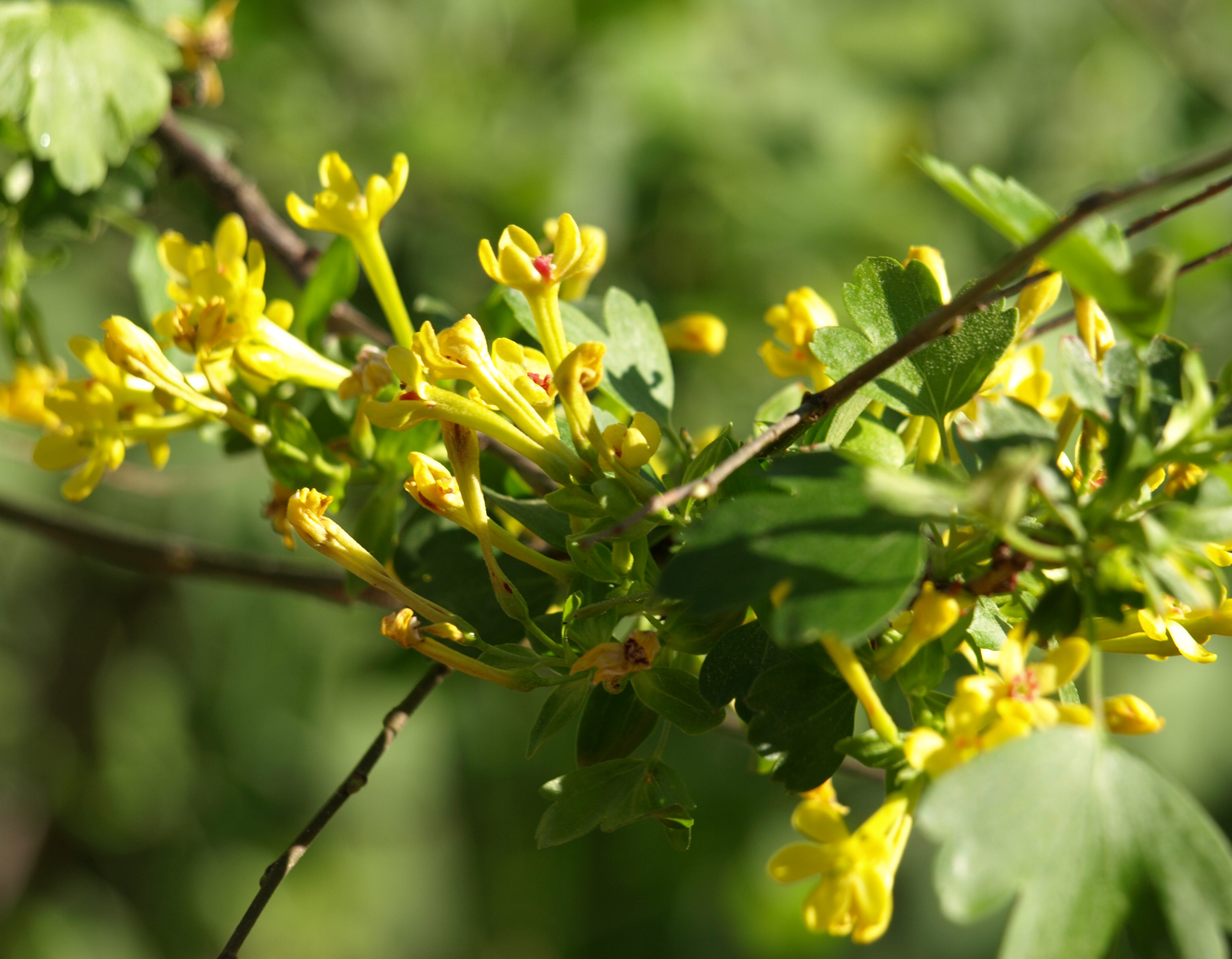
These are Mystery Berries.  I have a whole patch of them in the front under the Pin Oak.  If you know what they are I would appreciate knowing so I can put them where they will be happy and productive.  (Currently, they are not.) The berries are the size of blueberries, the color of green grapes, with a bit of lighter striping from stem to blossom end.   Oh yes, and it is thornless!

The leaf and fruit form remind me of the RIBES family.  Anyone?

UPDATE:  The mystery plant has been identified as Clove Currant or Ribes Odoratum.   Thank you Lori at Day by Day the Farmgirl Way!

You can find out more here on Dave’s Garden:  http://davesgarden.com/guides/pf/showimage/15424/


~*~

Thank you for visiting today and come back again soon!

~*~

NOTE:  Due to so many photos I kept them smaller to help with download time.   However, all photographs are clickable for a better view.   So, did it help?

Photo Friday: my love/hate relationship with morning glory

I have always loved morning glories.

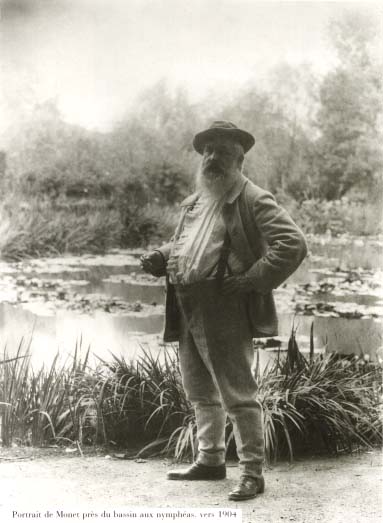
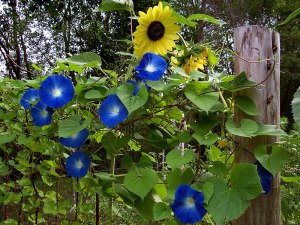
Monet used them to great advantage when he grew them amongst his sunflowers, it produced both contrast and a cooling effect to their warm hues. 

(Please do click the photo to visit casy/artandcolor’s site where you will find this original photograph and many more do delight your eye!)


Georgia O’Keefe loved them enough to memorialize them in her painting called simply

Blue Morning Glories

There is even a thermal pool in Yellowstone National Park called…

(Please click the picture to visit the source:  Wordless Tech)

Morning Glory Pool

So named for its beautiful blue depth and resemblance to it its namesake.

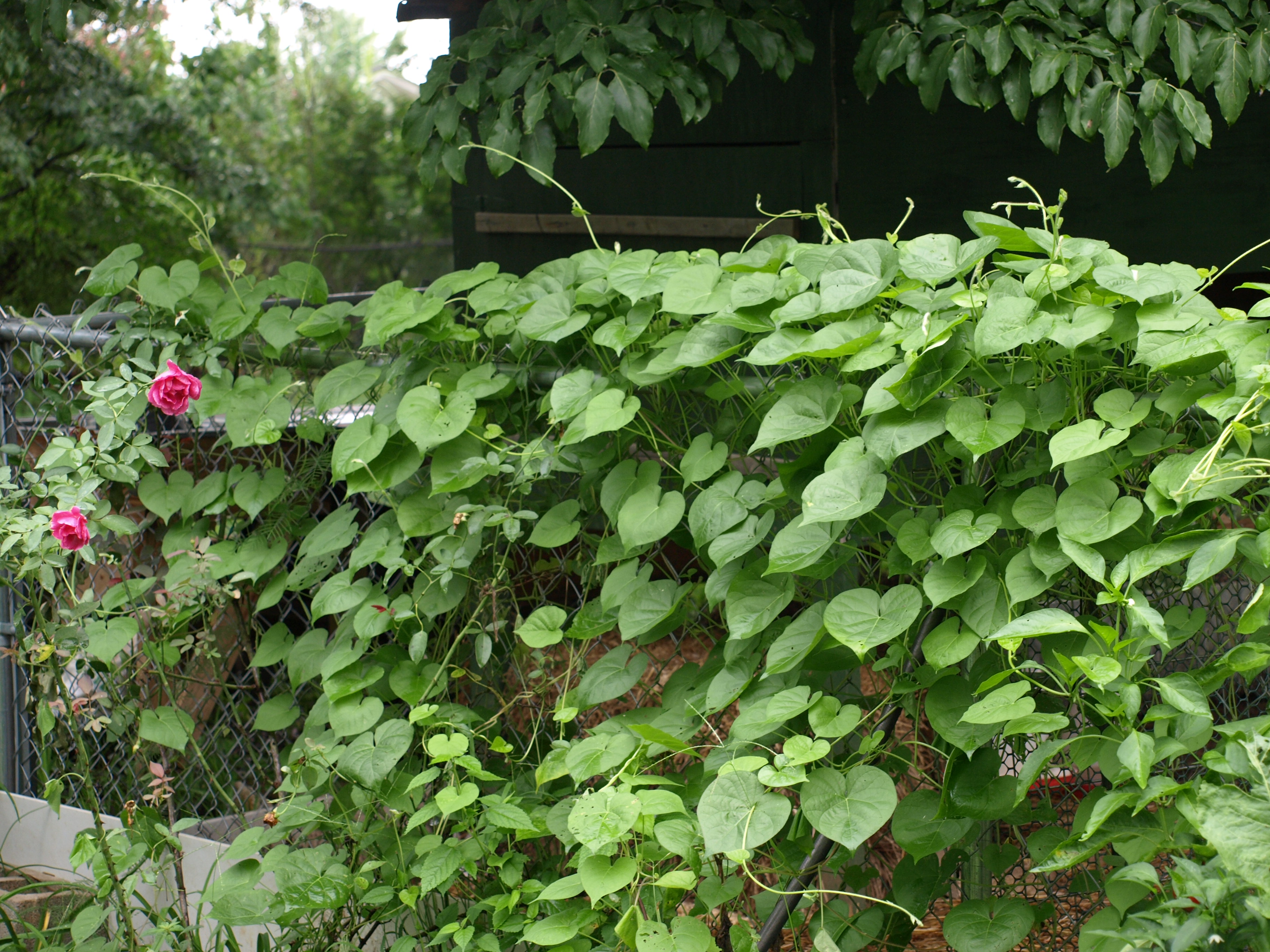
But for all her beauty and grace, the Morning Glory is a common hussy!  She grows everywhere here, rambling in field and lawn, scrambling up cornstalks and fences, and all but swallowing my roses!

Sigh…

and for all my searching, pulling, and destroying, she persists.

Yet, she beguiles me.

When on a humid, sunless, dare I say cheerless day in August I go out in the early morning only to find…

that she has sent out her snake-like tendrils to take over the fence surrounding the silkies hutch.

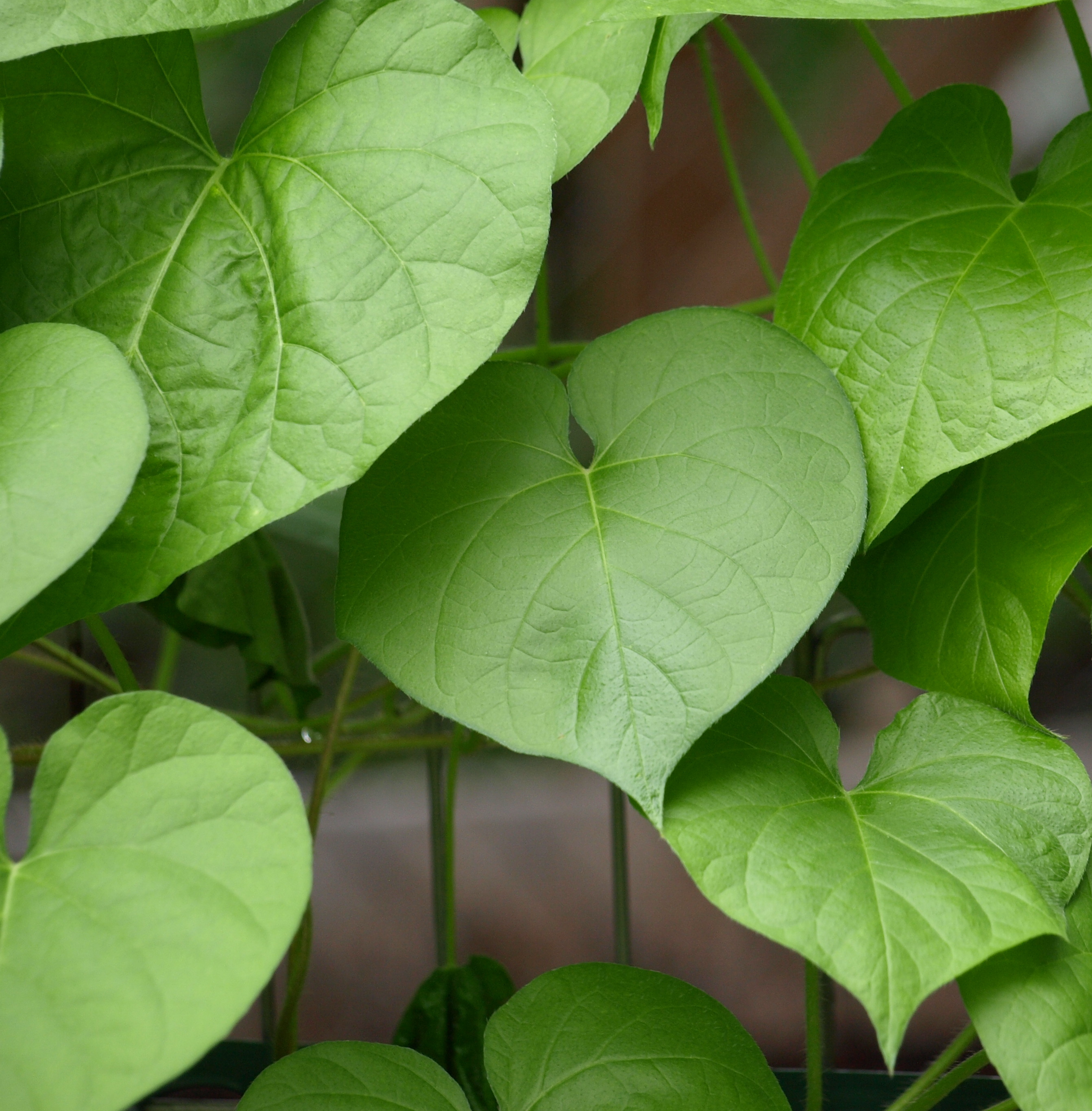
And reaching out to clutch her, intending to rip her from the fence, I grab a handful of leaves and realize…

I am holding her heart in my hand.

I grab again to pull…

and there amongst the perfect heart-shaped leaves I find her dew kissed face.  I’m drawn to her  intense blue, her clear white throat, and I think,

(Click on her face and have a closer look at her beauty)


“She is perfection.” 

Thus, I find myself for a third season, unable to remove Morning Glory from the Farmlet.   So she stays, having once again stolen my heart.

And in that moment

I consider the idea

of actually planting her in her own spot next year…

Perhaps amidst the sunflowers!